
Emergency moving guide: what to do when you have to move today starts with one simple goal: regain control. When a same-day relocation happens because of a lease problem, a sudden job change, a family issue, storm damage, or another urgent event, there is rarely time for a long checklist. In those moments, stress rises quickly, and it becomes easy to spend time on the wrong tasks.
Even a fast move needs structure. You need to know what to pack first, what can wait, what should stay with you, and when it is time to call for help. You also need a practical way to protect your belongings without slowing the process down. A clear plan can make the day feel more manageable and help you make better decisions under pressure.
Asheville Area Movers helps residents handle emergency moving situations with speed, organization, and dependable service. Whether you are facing a last-minute move across town or trying to line up last-minute movers before the day slips away, the right steps can help you act quickly, stay organized, and move forward with more confidence.

Get Organized in the First Hour
The first hour of an emergency move matters because it sets the pace for everything that follows. If you start by opening random drawers and throwing items into boxes, the day can spiral fast. Instead, take ten minutes to stop, breathe, and look at the moving situation in front of you.
Walk through the home once. Do not start packing yet. Identify what absolutely has to happen today. That usually includes securing transportation, collecting essential documents, pulling out medications, chargers, keys, wallets, work items, and a few changes of clothes. If children or pets are part of your household, their needs belong in this first round too.
Once you have a quick sense of the day, make a short list with only the tasks that matter right now:
- Confirm where you are going
- Find help or book movers
- Pack essentials first
- Separate valuables and documents
- Decide what can be donated, trashed, or stored
- Clear one path for boxes and loading
This is also the moment to set priorities by zone. Start with bedrooms, bathrooms, and kitchen basics before worrying about decor, bookshelves, or garage clutter. In a last-minute move, not everything deserves equal attention.
If you are moving with another adult, assign roles early. One person can handle calls, timing, and access details while the other starts sorting and packing. If you are alone, work in short blocks. Twenty focused minutes on a single room is far more effective than bouncing between five unfinished tasks.
The point of this first hour is simple. Do not let the emergency decide the order of your move. You decide the order.
Build a Fast Packing List and Collect Essential Documents
Once the first hour is under control, the next step is to decide what is actually going with you today. That sounds obvious, but it is where many urgent moves lose time. People spend too long packing low-value items while the belongings that actually matter stay scattered around the house.
Start with essential documents. Put them into one folder, backpack, or tote that stays with you and never goes on the truck unless you choose to place it there yourself. This should include:
- Photo IDs
- Lease or housing paperwork
- Insurance information
- Medical records you may need right away
- Financial documents
- School or work materials
- Car title or registration if relevant
- Pet records if you are relocating with animals
After documents, make three categories:
- Need today
- Need this week
- Can wait
Your “need today” group should be very small. Think medications, chargers, toiletries, phone and laptop, work supplies, a change of clothes, basic bedding, and anything needed for children or pets. These items should be packed separately and labeled clearly.
Your “need this week” group may include kitchen basics, towels, shoes, everyday clothing, and household items you use often. This group should move next.
Your “can wait” group includes decorative pieces, rarely used small appliances, off-season clothing, extra linens, and anything you can replace later if needed. In an emergency move, these are the belongings that may go into storage, donation, or a later trip.
This is also where cost control starts. A rushed move can become expensive when you pay to move items you do not want, do not need, or could replace for less than the cost of hauling them. The brief points to cost, items, storage, boxes, and services as useful terms for the body copy, and they fit naturally here.
If you feel stuck, ask one simple question: “Would I spend time and money moving this today if I had to load it in the next ten minutes?” If the answer is no, it should not be at the top of your list.
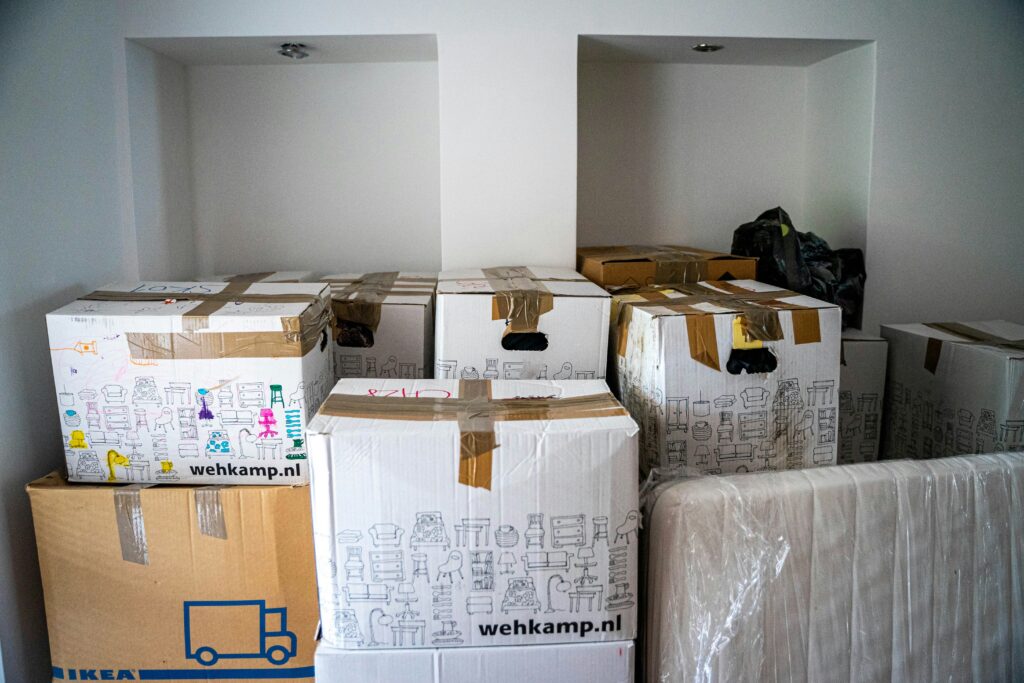
Pack for Speed Without Creating a Bigger Mess
Packing fast does not mean packing carelessly. You still need your items to arrive in one piece, and you still need to know where the essentials ended up. The best way to handle a rush move is to pack in layers.
Start by using what you already have. Suitcases, laundry baskets, backpacks, duffel bags, bins, and reusable totes are faster than hunting down perfect boxes.
Use boxes when you have them, but do not wait for ideal packing materials to begin. Wrap fragile items in towels, clothing, or blankets. Use soft goods to save space and add protection. Keep boxes liftable. Overpacked boxes slow the move and raise the chance of breakage.
A few rules make same-day packing easier:
- Pack one room at a time
- Label every box with the room and urgency level
- Keep “open first” items together
- Put heavier items in smaller boxes
- Put lighter items in larger boxes
- Do not mix trash, donations, and keep-items in the same pile
Color coding helps if more than one person is packing. Even a quick marker system can save time later. For example, blue for the bedroom, green for the kitchen, and red for items needed tonight.
In a moving emergency, it is also smart to create one “car kit” instead of boxing everything. This kit stays with you and includes:
- IDs and documents
- Chargers
- Medications
- Snacks and water
- Basic toiletries
- Paper towels or wipes
- Pet supplies
- One tool or box cutter
- A small cleaning kit
If time is running out, do not aim for a picture-perfect pack job. Aim for safe, labeled, and manageable. A box that is neat but unlabeled creates extra work later. A quick, clearly labeled box is much more useful in a last-minute move.
Find Last-Minute Movers and Avoid Common Problems
One of the hardest parts of emergency moving is finding dependable help fast. When you need to move urgently, it is tempting to call the first company that answers. That can create even more trouble if the service is vague, overpriced, or unprepared for a same-day job.
Start with local companies that know the area.
Ask direct questions:
- Do you handle last-minute moves?
- Are you available today?
- What services are included?
- Is there a minimum charge?
- Can you help with packing or just transport?
- Do you offer storage if the destination is not ready?
- What is the expected arrival window?
It also helps to know the red flags:
- No clear pricing structure
- No real business name or local contact information
- Refusal to answer basic questions
- Pressure to pay before details are confirmed
- Vague promises without timing or scope
If your moving situation involves a lease deadline, elevator problem, weather issue, or same-day key exchange, mention that immediately.
A rush move becomes easier when the movers know the pressure points before they arrive. Let them know about stairs, narrow halls, apartment access, loading zones, and parking limits. The more accurate the information, the smoother your move is likely to go.

Get Through Moving Day and Settle the Urgent Details
By the time moving day is in full swing, your focus should narrow. At this stage, the goal is not to rethink the whole move. It is to keep the plan moving forward.
Start with a final walk-through before the first box leaves. Check drawers, cabinets, medicine shelves, closets, and laundry areas. Make sure your essential documents and car kit are with you. Confirm who is carrying keys, who has the new address, and who is the point person for the movers.
As loading begins, keep pathways open and group boxes by priority. If something is fragile or needs to be unloaded first, say so clearly. Communication on moving day matters because small misunderstandings can waste time or put important items in the wrong place.
Once you reach the new place, do not try to unpack everything immediately. Start with the basics:
- Set aside the essentials bag
- Make one bed or sleeping area usable
- Plug in phones and chargers
- Unpack medications and toiletries
- Set up pet or child necessities
- Confirm that important documents are still with you
If your new place is not fully ready, ask about storage options rather than forcing boxes into the wrong rooms or leaving items exposed.
A same-day move can feel chaotic, but it does not have to stay that way. With a short list, smart packing, and dependable movers, you can get from crisis mode to a workable setup much faster than you think.
When every hour counts, Asheville Area Movers helps homeowners handle emergency moves with practical support, fast communication, and local service built for real-life last-minute moves. If you need help with your move today, contact Asheville Area Movers for a quote and let our team help you take the next step with less stress and a clearer plan.