
Upright vs grand: what it really takes to move each safely starts with understanding that piano moving calls for planning, patience, and the right equipment. Many homeowners assume an upright piano is simpler to handle because it takes up less space, while a grand piano seems harder only because it is larger. In practice, each type brings its own risks and demands a different approach.
An upright piano has a smaller footprint, but its height and top-heavy balance can make it awkward in hallways, on stairs, and around tight corners. A grand piano spreads its weight across a horizontal frame, which changes how movers support, lift, pad, and transport it. Its shape, legs, and lid add another layer of complexity, especially when the move involves steps, narrow doorways, or older Asheville homes.
That difference matters because moving a piano is not like moving ordinary furniture. A scratched finish, bent pedal assembly, damaged leg, or internal shift can lead to repairs that cost far more than the move itself. Floors, walls, railings, and entryways are also at risk when the route and equipment are not planned.
Asheville Area Movers helps homeowners move both upright and grand pianos with a careful process built around the instrument, the home, and the route. If you are deciding whether to handle a piano move yourself or hire piano movers, understanding what each type requires is the best place to start.
How Upright and Grand Pianos Differ Before Moving Day
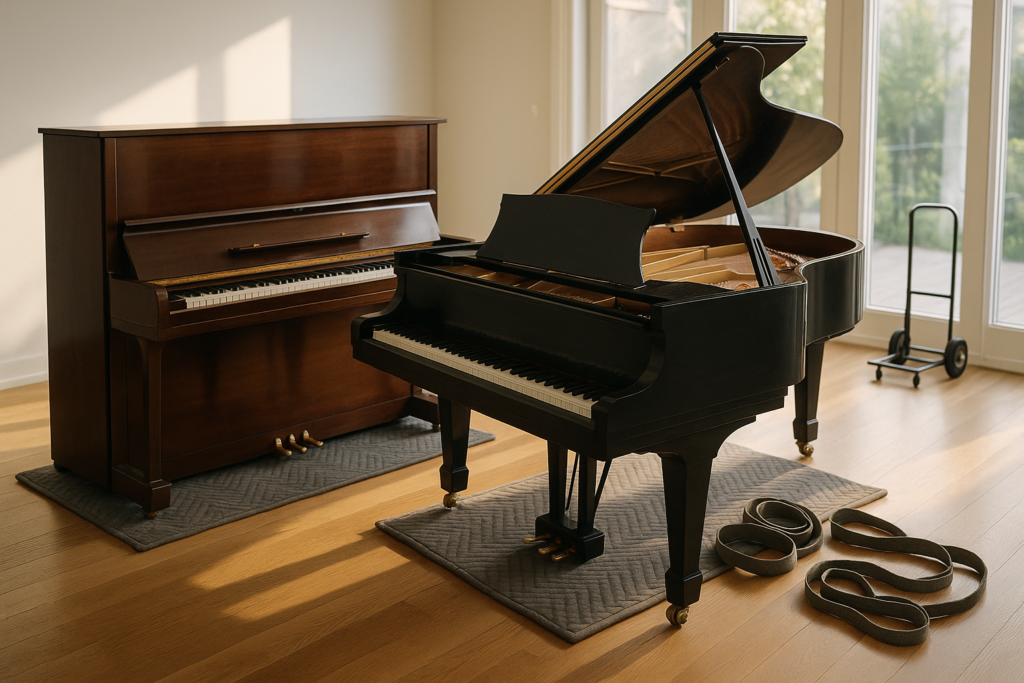
Before anyone lifts a piano, it helps to understand the design differences that shape the move.
An upright piano stores its strings and soundboard in a vertical layout. That makes it narrower than a grand and easier to fit into many rooms. It also places a lot of weight high off the ground. While some homeowners assume upright pianos are easier to move, that is only partly true. Their compact shape can help with access, but the weight distribution can make them difficult to steady once they start moving.
A grand piano spreads its structure across a horizontal frame. That gives it a lower profile, but the body is wide, heavy, and harder to guide through standard residential spaces. The legs, lid, and lyre assembly add fragile points that need special handling. In many cases, a grand piano requires partial disassembly before transport. That alone sets it apart from many upright moves.
There is also a planning difference. With an upright piano, movers are often assessing height, tight corners, and balance. With a grand, they are often assessing width, leg removal, board placement, and whether the route allows the piano body to pass without damage. Both require measurements, but the obstacles are not always the same.
Before moving day, homeowners should measure:
- the piano itself
- doorways and hallways
- stair width and landings
- entry thresholds
- the destination room
Choosing the destination spot matters too. Both piano types should be placed away from direct sunlight, heating vents, fireplaces, and damp areas when possible. Climate swings can affect finish, wood movement, and tuning after the move.
Why Upright Piano Moves Can Be Harder Than They Look
Many people see an upright piano and assume it is the easier option because it looks smaller and stands against a wall. That can lead to a false sense of confidence.
An upright piano may take up less floor space, but it is still extremely heavy. The weight is concentrated in a way that can make tipping a real concern during loading, unloading, or stair work. When an upright starts to lean too far, it can become difficult to recover without enough trained help on hand.
That is why upright piano moving depends on controlled balance. Movers need to secure the lid, protect the pedals, wrap the case with moving blankets, and position the instrument correctly on a dolly or moving board. Padding should cover corners, edges, and any point likely to contact a wall or door frame.
Common problems during upright moves include:
- tipping on stairs or ramps
- scraped walls and trim
- damaged floors from poor dolly use
- pressure on the pedals or lower panel
- twisting the frame during awkward turns
One reason upright pianos are tricky is that they often move through tighter areas than grands. Because the piano appears compact, people try to force it through turns that do not provide enough clearance. In Asheville homes with narrow halls, older staircases, or uneven entries, that can turn into a repair bill very quickly.
A safe upright move starts with a clear route. Remove rugs, lamps, side tables, artwork, and other obstacles before moving day. Protect high-contact surfaces. Make sure the moving crew has enough space to work without sudden stops. Then focus on balance. Uprights need even handling from side to side, especially when going up or down stairs.
This is also where experience matters. A seasoned piano mover understands that “smaller” does not always mean “simpler.” In many homes, the upright is the piano that tempts people into a do-it-yourself move that goes badly.
What Makes a Grand Piano Move a Different Project
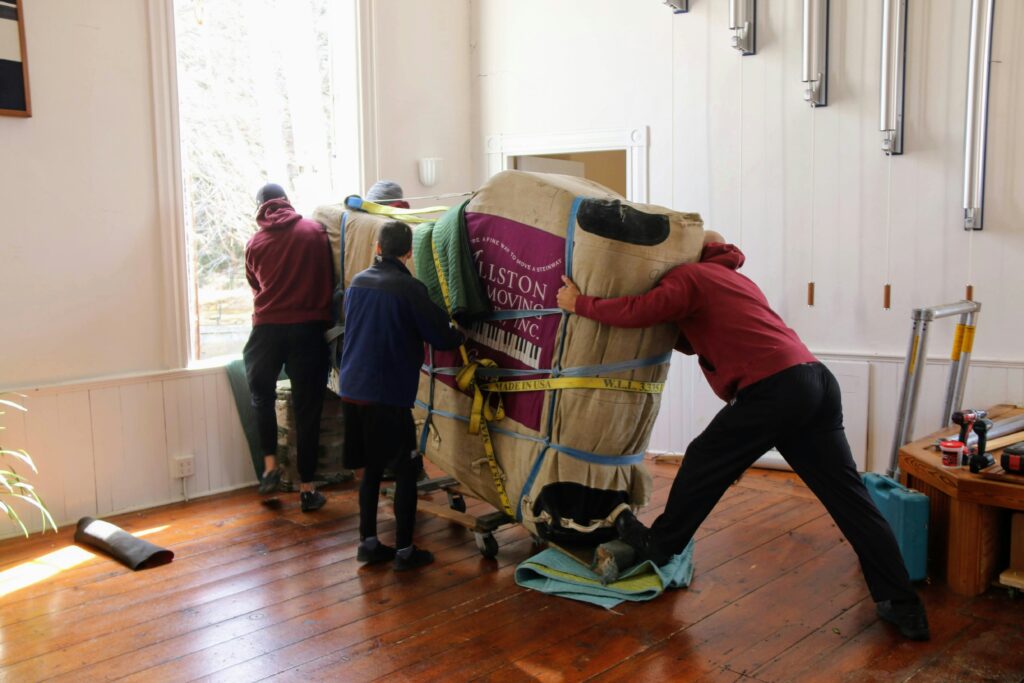
A grand piano move is usually a larger project, and not only because of the instrument’s size. The shape of the piano changes almost every part of the process.
A grand piano has a broad horizontal body, projecting legs, and a lid assembly that needs careful protection. That frame is harder to guide through residential spaces, and the legs cannot be treated as carrying points during the move. In most cases, movers will remove the legs and secure the body to a skid board or specialized board before transport.
Grand piano moves often involve removing the legs, supporting the body with a skid board, and using precise coordination between movers.
Here is why that matters. Once the legs are removed, the piano body still carries significant weight and must stay stable during lifting and transport. The movers need to:
- Pad the case and lid carefully
- Remove vulnerable parts in a controlled order
- Label and protect hardware
- Place the body on the board securely
- Strap it so there is no shifting during transport
Grand pianos also create challenges with turning radius. Even if a doorway is wide enough, the body may still be hard to angle through a hall or stair landing without enough clearance. That is one reason a grand move tends to need extra pre-planning.
There is also a higher chance of cosmetic damage if the move is rushed. The piano’s curved side, polished finish, and hardware can all suffer from minor contact. Inside the instrument, movement and vibration can affect regulation and tuning. While any piano may need tuning after a move, a poorly handled grand can end up needing much more attention.
Some homeowners wonder whether a grand is easier to move because the weight sits lower than an upright. In practice, the width, disassembly, and precision required usually make it a more demanding move. The process is methodical, not quick. A grand piano move rewards preparation and punishes shortcuts.
The Equipment, Planning, and Handling That Keep Pianos Safe
Whether the job involves an upright or grand piano, the safest piano moves follow the same general rule: the move should be controlled from the first measurement to final placement in the new room.
That begins with equipment. Household hand trucks and basic moving gear are not enough for piano moving.
Equipment that often matters
| Equipment | Typical use for upright | Typical use for grand |
| Piano dolly | Supports movement across stable surfaces | Used with board or staged loading |
| Skid board or piano board | Sometimes used for support and transport setup | Often central to body support after leg removal |
| Moving blankets and foam padding | Protects case, corners, pedals, and edges | Protects body, lid, legs, and removed parts |
| Heavy-duty straps | Stabilizes the piano on equipment | Secures body and components to the board |
| Floor protection | Helps protect hardwood, tile, and thresholds | Helps protect surfaces during staging and exit |
Planning is just as important as equipment. That includes inspecting the route, checking thresholds, identifying tight corners, and deciding how the piano will be loaded into the vehicle. The movers should also know where the piano will go at the destination and whether they need to navigate stairs, gravel, steep drives, or uneven approaches.
Handling is where planning and equipment meet. A safe move should look calm and coordinated, not rushed. One mover may guide the route while others control weight and angle. Communication matters at every step, especially when dealing with stairs or a changing surface.
Good handling also protects the house. Moving blankets and surface protection reduce the chance of dents, scratches, and chipped trim. In many cases, a careful crew protects the instrument and the home at the same time because the same slow, deliberate motion helps both.
After transport, placement matters. Let the piano settle into the room before booking a tuning. Changes in humidity and temperature can affect pitch, and the move itself can shift internal components slightly. A good piano move does not stop when the instrument reaches the house. It ends when the piano is safely placed and ready to acclimate.
When to Call Professional Piano Movers in Asheville
Some moves can be handled with friends, time, and a rented truck. Piano moving is usually not one of them.
If the route includes stairs, narrow landings, sloped driveways, tight hallways, or a grand piano of any size, it is smart to call professional piano movers.
A professional piano mover brings:
- experience with upright and grand piano moves
- the right board, dolly, straps, and padding
- a plan for disassembly when needed
- safer lifting and loading methods
- better protection for floors, walls, and entryways
In Asheville particularly, steep streets, hillside lots, older homes, and compact entryways can turn a routine move into a difficult one.
It also matters when homeowners compare costs. The cheapest quote can become the most expensive option if the move leads to damage. An upright piano on a simple ground-floor route may be fairly straightforward for a trained crew. A grand piano that needs partial disassembly and stair work is a different level of job. The only useful quote is one based on the actual piano, home layout, access conditions, and distance involved.