Your piano holds memories—here’s how to move it safely. A piano often carries years of family history. It may be where a child learned scales, where holiday songs filled the room, or where someone played to unwind after a long day. When it is time to move, you are not simply relocating a heavy instrument. You are protecting a meaningful part of your home.
That is why piano moving calls for a different approach than moving a couch, dresser, or dining table. A piano is heavy, difficult to grip, and vulnerable to damage when handled the wrong way. Its finish can scratch, its legs and pedals can bend, and its internal parts can shift during transport. The risk extends to your home as well. Floors, walls, door frames, and stair railings can all be damaged during a rushed or poorly planned move.
Whether you own an upright piano or a grand piano, the safest move starts with careful planning, proper equipment, and a team that understands how to handle the job. Asheville Area Movers helps families move treasured instruments with steady hands, clear communication, and the level of care these items deserve, so your piano arrives safely in its next room or next home.
Assess Your Piano and Plan the Route
The first step is to assess your piano and the space around it. That means looking closely at the instrument, identifying its type, checking its condition, and mapping every part of the moving path before anyone tries to lift it.
Start by identifying what kind of piano you have. An upright piano may look easier to handle because it takes up less floor space than a grand piano, but that can be misleading. Uprights are still very heavy, and much of the weight sits in a way that makes the instrument hard to balance. Grand pianos create a different set of problems because of their width, shape, legs, and delicate structure.
Take note of the piano’s current condition. Check the piano’s surface for scratches, dents, loose trim, or worn spots. It is smart to take a few photos before the move so you have a clear record. This also helps you spot areas that may need extra padding.
From there, measure everything. Measure the piano, the doorways, the hallways, the staircases, and the entry point at the new location. If the piano has to turn a tight corner, count that into your planning. If it has to cross a porch, walkway, or uneven threshold, account for that too. Many moving problems start because someone assumed there would be enough space.
It also helps to choose the piano’s new location before moving day. A good placement can protect the instrument long after the move is finished. Try to avoid drafty windows, direct sunlight, heating vents, and damp areas. Temperature swings and moisture can affect wood, strings, and tuning.
As you plan, clear the route completely. Remove rugs, lamps, shoe racks, small tables, and wall decor that could get in the way. Give the movers enough space to work without having to stop and shift household items while carrying the instrument. When the route is open and measured, the move becomes much safer for both the piano and the people handling it.
Pre-Move Piano Safety Checklist:
- Measure the piano, doorways, hallways, staircases, and entry points
- Check for tight corners, uneven thresholds, porches, and narrow turns
- Photograph the piano’s current condition before moving day
- Clear rugs, lamps, small tables, and decor from the path
- Choose the piano’s new location in advance
- Keep the instrument away from direct sunlight, vents, and damp areas
- Confirm whether the move involves stairs, steep driveways, or limited access
Piano Preparation Before Moving Day
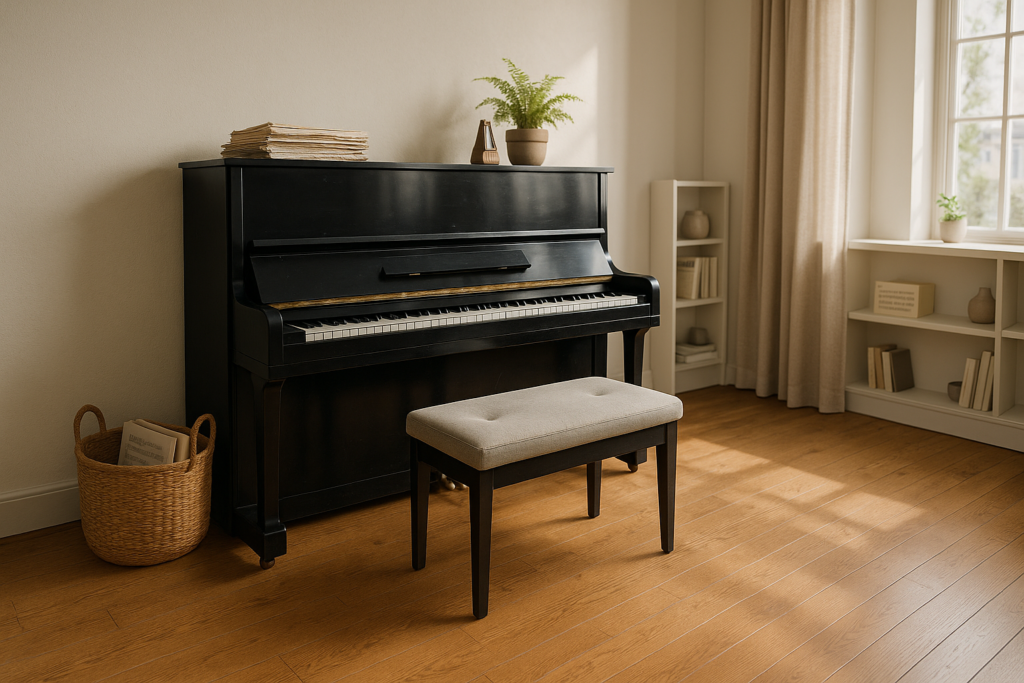
Good piano preparation can reduce the chance of damage before the move even begins. It gives the instrument a layer of protection and helps the movers manage its weight and shape more safely.
Begin by securing the keyboard lid. If the piano has a removable music stand or loose accessory parts, take them off and wrap them separately when appropriate. The pedals should also be protected because they can catch on objects or bend if they are hit during transport. Padding around delicate areas helps absorb contact and lowers the risk of cosmetic or structural damage.
Next, wrap the body of the piano with moving blankets and protective padding. This helps protect the finish from scrapes, pressure marks, and accidental contact with walls or door frames. Make sure the blankets stay snug and do not shift during the move. Loose wrapping can create its own hazard if it slips while the piano is in motion.
The right equipment matters here. A household hand truck is not enough for safe piano moving. Piano movers use specialized equipment built for the size, weight, and balance of these instruments. Depending on the type of piano and the route, that may include a dolly, piano board, heavy-duty straps, padding, and loading tools designed for controlled movement. If you are working with a grand piano, the preparation may also involve partial disassembly so the instrument can be handled and secured properly.
One mistake people make is trying to move a piano by lifting from the wrong points. Never lift by the legs, the pedals, or decorative trim. Those parts are not designed to support the full weight of the instrument. Another mistake is trying to rush the wrapping and setup stage because it seems minor. In reality, this is one of the most important parts of the process.
Preparation should include the home as well as the piano. Floor runners, corner protection, and wall padding can help protect your property. If there are pets or small children in the home, keep them away from the moving path. Clear space helps the crew stay focused and lowers the chance of accidents.
When a piano is prepared correctly, it is easier to secure, easier to control, and less likely to suffer avoidable damage.
Why Professional Movers Matter for Piano Moving
There are some household items that can be moved with a little extra effort and a couple of friends. A piano is usually not one of them. The size and weight alone make it risky, but what really sets piano moving apart is the combination of weight, shape, and fragility.
Professional piano movers bring more than labor. They bring planning, coordination, and experience with instruments that cannot be treated like standard furniture. A trained piano mover knows how to assess the route, where to place straps, how to keep the piano balanced, and how to load it into the vehicle so it stays secure during transport.
This matters for upright pianos and even more for grand pianos. A grand piano often needs special handling because its legs, lyre, and body require a different approach. A careless move can damage the case, strain structural parts, or affect the instrument’s long-term performance. That is why specialized equipment and trained handling are so important.
Professional movers also reduce risk to the home and to the people involved. Pianos can cause serious injuries if they shift unexpectedly on stairs or slopes. They can also leave costly damage behind on hardwood floors, tile, trim, and doorways. A team that handles piano moving regularly is far better equipped to prevent those problems.
Questions to Ask Before Hiring Piano Movers:
- How often do you handle upright and grand piano moves?
- What specialized equipment will you use for this job?
- Will the piano need partial disassembly before transport?
- How many movers will be assigned to the move?
- How will you protect floors, door frames, and stair railings?
- How will the piano be secured inside the truck?
- What details do you need about access at both locations?
- Can you explain the moving process step by step before the job begins?
Asheville Area Movers approaches piano transport with the same care homeowners want for any item tied to family history and daily life. That includes clear planning, protective materials, and methods designed around the instrument rather than around speed. For a local move across town or a shorter in-home relocation, that kind of handling can make the difference between a smooth move and an expensive mistake.
Hiring professional movers also gives you clearer expectations. You can ask how the piano will be prepared, what equipment will be used, how many movers will handle the job, and how the instrument will be secured in the truck. A reliable company should be able to explain the process without hesitation.
Safe Moving Techniques for Upright and Grand Pianos
Although every piano move has its own challenges, upright and grand pianos need different handling methods
An upright piano may be simpler in shape, but it is still dense and difficult to control. The center of gravity can shift quickly, especially on stairs or uneven ground. The goal with an upright is to keep it stable, supported, and protected from start to finish. Movers typically secure the lid, protect the pedals, wrap the body, and position the piano on the right moving equipment so it can be rolled and guided with care.
A grand piano requires even more attention. Because of its size and shape, it often cannot be moved safely in one assembled piece through a normal home. Its legs may need to be removed, and the body may need to be placed onto a piano board for support. Each removed part has to be wrapped and labeled carefully. That takes patience, specialized tools, and a crew that works well together.
| Piano Type | Main Challenge | Typical Preparation Needs | Why Professional Handling Helps |
| Upright Piano | Dense weight and shifting balance | Secure lid, protect pedals, wrap body, position on proper moving equipment | Helps keep the piano stable through turns, stairs, and uneven surfaces |
| Baby Grand Piano | Wider shape and delicate structural parts | Remove or protect parts as needed, wrap carefully, support on a piano board | Reduces the risk of strain, impact damage, and poor balance during transport |
| Grand Piano | Large footprint, fragile legs, and more complex disassembly | Remove legs when needed, wrap each part, label components, secure body for loading | Makes it easier to protect the finish, structure, and internal parts from damage |
Team coordination is a major part of safe piano moving. The process should never look rushed. One mover may guide the route while others manage the weight and keep the instrument level. Communication matters at every step, especially when maneuvering through narrow hallways, down steps, or around corners.
Keeping the piano secure in the moving vehicle is just as important as getting it out of the house. Once loaded, the instrument needs to be anchored so it does not shift during transport. Padding should stay in place, and the placement inside the truck should support the piano rather than leave it vulnerable to movement.
For some homeowners, the question is whether they can move a piano across the room on their own. In limited cases, very careful repositioning may be possible, but even small moves come with risk if the flooring is delicate or the instrument is not supported properly. A short move inside the house can still result in scratched floors, damaged legs, or injury if the piano slips.
The safest method is always the one that respects the instrument’s weight and design. That means proper support, protective padding, and experienced movers who understand how pianos respond during movement.
Protect Your Home, Settle the Piano, and Know When to Call
A good piano move protects the home as much as the instrument. Since pianos are large and awkward, they can brush against walls, door frames, railings, and flooring when the route is not protected. That is why movers use moving blankets, padding, and careful positioning throughout the job.
Before the move starts, protect the areas most likely to come into contact. Tight corners, entryways, and thresholds deserve extra attention. Hardwood floors may need runners or other protective materials, especially if the piano will be rolled over them. A little preparation up front can help prevent costly repairs later.
Once the piano arrives at the new home, place it in the spot you chose during the planning stage. Try to keep it away from direct heat, strong sunlight, and moisture. Let the instrument settle before scheduling tuning. Even a careful move can affect pitch, especially after changes in temperature or humidity.
Many homeowners also want to know what piano moving services typically cost. The answer depends on the type of piano, the difficulty of the route, the number of stairs, the distance traveled, and whether the move includes a grand piano or storage. An upright piano on a simple ground-floor route will usually cost less than a grand piano that requires disassembly and tighter access. The best way to get an accurate quote is to base it on the actual layout and instrument type.
Price matters, but experience matters too. A low quote does not help if the move leads to damage to the piano, the home, or the people involved. When comparing movers, ask specific questions about piano experience, equipment, and handling methods.
Your piano has already carried years of memories. Moving it should protect those memories, not put them at risk. Asheville Area Movers handles piano moving with planning, care, and respect for the instrument and the home around it. If you need help moving an upright piano or grand piano safely, contact Asheville Area Movers for a quote.