
Fragile belongings need extra attention before a long-distance move. A short trip across town can be forgiving, but hours on the road, tight turns, stacked boxes, and repeated handling leave less room for rushed packing. Packing for the Long Haul: 16 Foolproof Hacks for Fragile Items gives you a practical way to protect dishes, glassware, mirrors, keepsakes, electronics, artwork, and other delicate pieces before moving day arrives.
At Asheville Area Movers, we help local families and businesses prepare for moves across Asheville’s hills, narrow streets, older homes, apartment stairs, and longer routes beyond Western North Carolina. Good packing starts before the truck is loaded. The right moving boxes, steady tape, soft cushioning, and a clear plan can reduce shifting and breakage while keeping your move easier to manage.
Start with the Right Packing Materials before You Pack
Fragile packing goes smoother when the supplies are ready before the first cabinet opens. Running out of cushioning halfway through the job leads to shortcuts, and shortcuts are where cracks, chips, and scratched finishes usually begin. Set up a packing station with clean surfaces, good lighting, and enough space to separate delicate pieces from heavier household goods.
Use a double wall corrugated box for dishes, glassware, collectibles, and anything with weight. Thin, worn, or damp boxes can collapse when stacked. Smaller boxes are usually better for breakables because they limit weight and keep each box easier to lift. Large containers may seem efficient, but they invite overpacking and leave too much room for movement. If you’re trying to save on supplies, start with sturdy boxes you can trust before looking for free moving boxes from local sources.
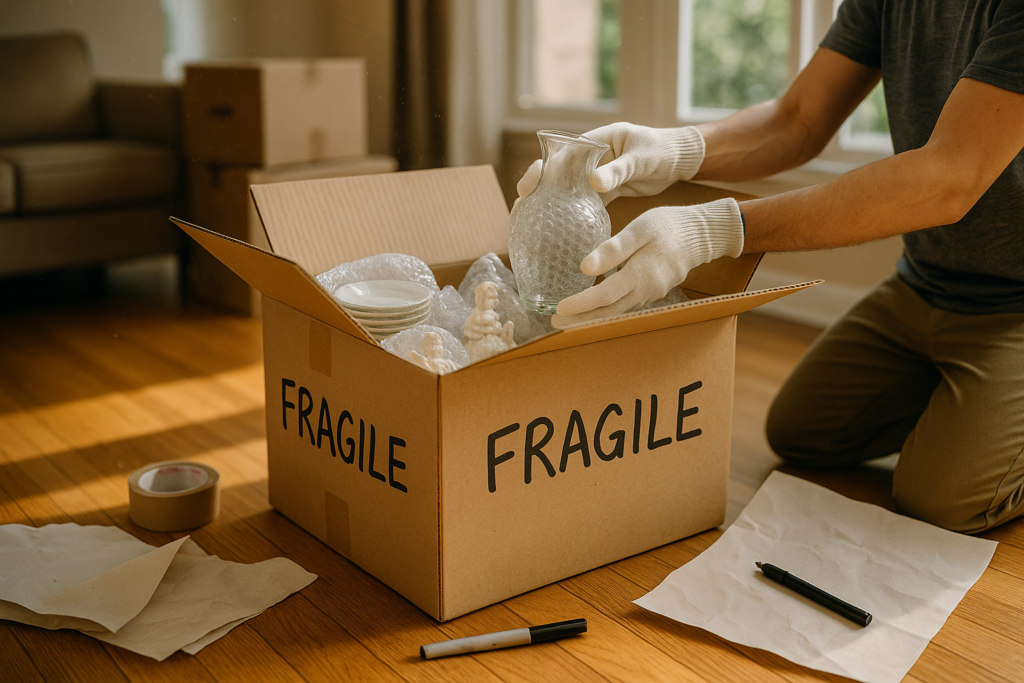
Gather bubble wrap, packing paper, towels, clean linens, cardboard dividers, labels, markers, and strong tape. An old t-shirt can work well around mugs, small vases, or odd shapes, especially when paired with paper or padding. Soft household materials save space because they move with you anyway, but they should be clean, dry, and free of zippers or buttons that could scratch glass items.
| Fragile Item | Best Packing Material | Helpful Packing Move |
| Dishes and bowls | Packing paper, bubble wrap, dish pack boxes | Pack plates vertically with padding between each piece |
| Glasses and stemware | Cell dividers, paper, bubble wrap | Wrap each piece separately and fill hollow spaces |
| Mirrors and framed art | Mirror cartons, cardboard corners, blankets | Protect corners first, then keep each piece upright |
| Electronics | Original packaging, anti-static wrap, towels | Remove cords, label them, and pack screens with firm padding |
| Ceramics and keepsakes | Bubble wrap, packing paper, small boxes | Cushion each item before placing it in a snug container |
Before you seal anything, test the weight. A packed container should feel stable, not strained. If it bows, rattles, or shifts when lifted, open it and adjust the contents. Good packing materials should support the item on all sides, not just cover the surface.
Wrap Fragile Items so They Can Handle the Road
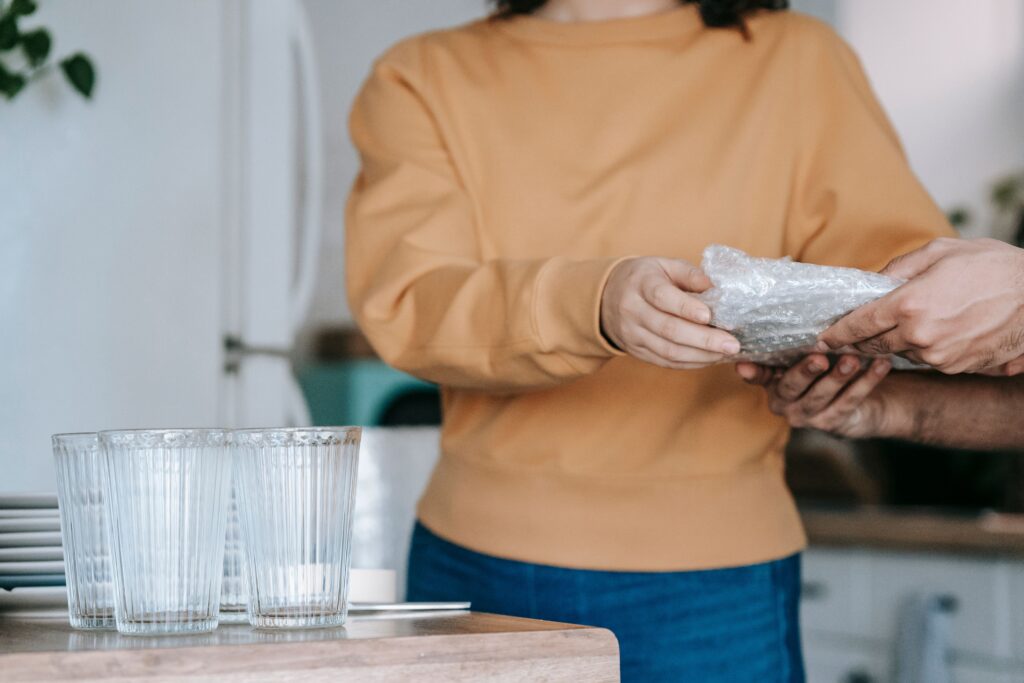
The safest way to pack fragile items is to treat each piece as its own small project. Wrap your most fragile items separately, then build a padded layer around the group inside the box. This matters on long-distance trips because vibration builds over time. Even a small amount of movement can turn into damage after hours of driving.
Start with a soft layer on the bottom of the box. Crumpled packing paper, towels, or folded linens create a cushion that absorbs pressure from below. Wrap each item fully, secure the wrap with tape, and keep tape off delicate finishes when possible. Bubble wrap works best with the bubbles facing inward for shock absorption, especially for ceramics, glassware, and small decor.
For cups, vases, and bowls, fill the hollow center first. Empty space inside a piece can make it more vulnerable to pressure. Use paper or a soft cloth, then wrap the outside. For plates, avoid stacking them flat. Stand them on edge like records, with padding between each one. This helps spread weight and reduces direct pressure on the center of each plate.
- Use small or medium boxes for fragile items so the load stays manageable.
- Place heavier pieces on the bottom and lighter pieces near the top.
- Fill empty space with paper, towels, or bubble wrap before sealing.
- Gently shake the box before taping it closed. If anything moves, add padding.
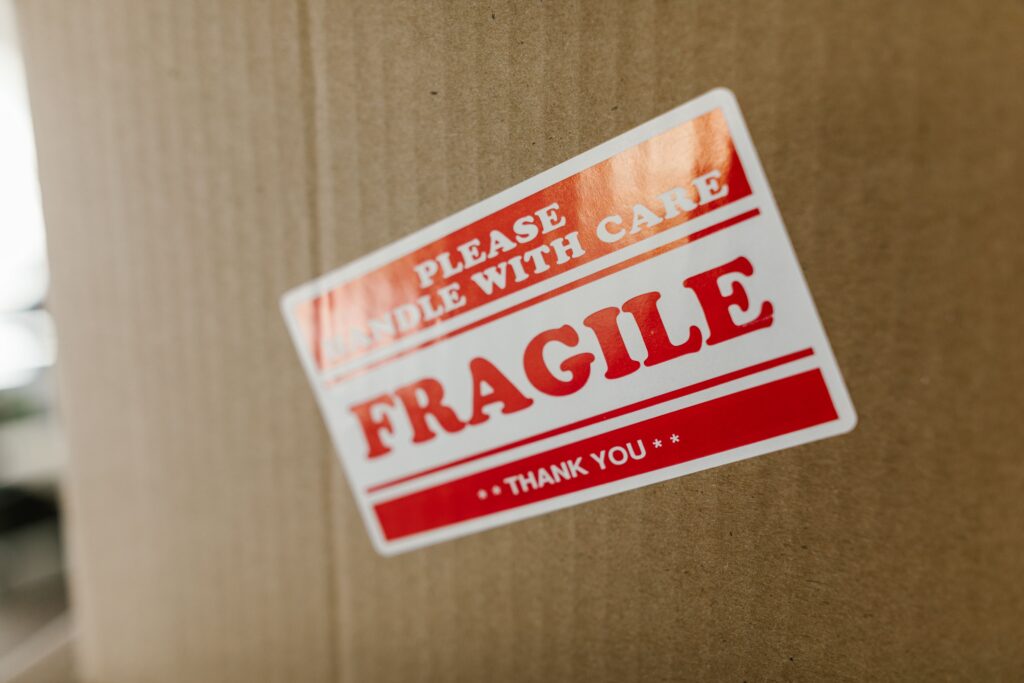
- Label at least two sides so the fragile note is visible from different angles.
Mirrors, framed photos, and artwork need firm edge protection. Corners take most of the impact during handling, so reinforce them before covering the front and back. Use cardboard corner guards when possible. Keep these items upright during moving and storage because flat stacking can put pressure on the glass or frame.
Electronics need a slightly different approach. Remove cords, label them, and place them in a small bag that travels with the device. Screens should be covered with a soft cloth before adding firmer padding. Avoid loose foam pieces that can create static around sensitive equipment. If you still have the original packaging, use it. If not, choose a snug box with thick cushioning on every side.
Use 16 Foolproof Hacks to Reduce Breakage
Small packing choices add up. When you’re moving across a longer route, every layer, label, and spacing decision affects how well fragile belongings hold up. These 16 practical packing tips are simple enough for a DIY move and still useful when you’re preparing items for professional movers.
- Build a cushion first. Add several inches of padding before placing anything inside the box.
- Pack by category. Keep dishes with dishes, glassware with glassware, and decor with decor.
- Wrap each piece alone. Items wrap better when they aren’t touching another hard surface.
- Use dividers for stemware. Cell kits help keep glasses from knocking together.
- Stand plates upright. Vertical packing lowers pressure on the center of each dish.
- Protect handles and spouts. Mugs, pitchers, and teapots need extra padding around weak points.
- Reinforce seams with tape. Tape the bottom seam, then add a strip across it for support.
- Keep fragile and heavy separate. Don’t mix breakables with books, tools, or canned goods.
- Use towels for gaps. Towels add cushioning and help reduce wasted space.
- Choose the smallest safe box. A snug fit is safer than a roomy container with lots of movement.
- Label by room and risk. Write the destination room and mark fragile on multiple sides.
- Photograph valuable setups. Take photos of electronics, displays, or grouped decor before packing.
- Keep heirlooms separate. Sentimental pieces deserve their own padded container.
- Pack a first-open box. Include everyday dishes, chargers, and items you’ll need right away.
- Don’t overfill. Leave enough room for a top cushion before sealing.
- Load fragile boxes last when possible. They should avoid heavy stacking and be easy to identify.
These steps work because they control movement. Most breakage doesn’t come from one dramatic drop. It often happens because items shift, rub, or press against each other while the truck is in motion. A well-packed box should feel dense, cushioned, and quiet when handled.
If you’re packing fragile belongings for storage before the move, think about temperature and access. Asheville weather can bring humidity, quick temperature swings, and damp conditions in garages or sheds. Choose climate-controlled storage for wood, artwork, electronics, photos, and delicate keepsakes when possible. Keep fragile boxes off the floor, away from exterior walls, and stacked lightly.
Prepare Large Items, Furniture, and Bulky Pieces Safely
Fragile doesn’t always mean small. Large items such as china cabinets, glass-top tables, mirrors, lamps, framed art, and antique furniture can be harder to protect because they’re awkward to lift and easy to bump. Before moving day, measure doorways, halls, staircases, elevators, and tight turns. Asheville homes often have older layouts, sloped driveways, narrow steps, or limited truck access, so planning the path matters.
Disassemble bulky pieces when doing so makes the item safer to handle. Remove table legs, shelves, loose drawers, glass panels, knobs, and detachable hardware. Place screws and small parts in a labeled bag, then tape the bag to a protected section of the item or keep it in a hardware container. Don’t tape hardware directly to finished wood, glass, or painted surfaces.
Wrap furniture with moving blankets first, then add stretch wrap to hold the blanket in place. Avoid placing plastic wrap directly against wood for long storage periods because trapped moisture can affect the finish. Glass tops should be removed, wrapped, labeled, and carried separately. Lampshades should go in their own boxes with no heavy items above them.
Large mirrors and framed art need upright transport and firm side support. Mark the front clearly so helpers know which direction the item should face. For especially valuable or oversized pieces, professional packing can be worth the cost.
Asheville Area Movers can help with careful handling, packing support, and moving advice based on the layout of your home and the distance of your move.
Label, Track, and Store Fragile Boxes the Smart Way
Good organization protects your belongings and saves time when the truck arrives. A fragile label helps, but it’s not enough by itself. Each box should tell handlers where it goes, what level of care it needs, and whether it should stay upright. Clear labeling also helps you avoid opening ten boxes just to find one set of dishes.
Number each box and keep a simple inventory on your phone or a printed sheet. You don’t need to list every spoon or glass, but you should record the main contents. For example, “Kitchen 4, wine glasses and serving bowls” is enough to guide careful handling and make unpacking easier.
Use bold writing on at least two sides and the top. Add notes such as “top load only,” “keep upright,” or “do not stack” when needed. Cover handwritten labels with clear tape if the boxes may sit in storage or be carried through rain. Labels can smear quickly during a busy move.
When stacking boxes, place fragile containers above heavier goods and away from sharp edges. Don’t build tall stacks with breakables, even if the lower box feels sturdy. Weight and vibration can weaken cardboard over time. If you’re using storage between homes, create a walkway so delicate items can be reached without moving heavy furniture first.
Communication matters too. Tell anyone helping with the move which items need gentle handling before the loading begins. If you’re working with a moving company, point out the pieces that worry you most during the walkthrough. A few minutes of clear direction can prevent rushed decisions later.
Move with Care with Asheville Area Movers
Packing fragile belongings takes patience, but it doesn’t need to feel overwhelming. Strong boxes, steady cushioning, smart labels, and a careful loading plan can protect the items that matter most. From dishes and glassware to heirlooms, artwork, electronics, and bulky furniture, the goal is simple: limit movement, support weak points, and make every container easy to handle.
If you’d rather have help with packing fragile items, heavy lifting, or long-distance moving, Asheville Area Movers is ready to support your next move. Our local team understands Asheville homes, mountain roads, apartment access, and the care needed for delicate belongings.
Reach out for a free moving quote, packing help, or friendly advice before moving day.