
A piano may look like one large piece of furniture, but it moves nothing like a couch, dresser, or dining table. It is heavy, awkward to balance, and filled with delicate internal parts that can be damaged by the wrong angle, an uneven lift, or too much vibration in transit. That is why piano moving requires professionals.
For Asheville homeowners, the challenge is even greater. Many local properties include steep driveways, narrow halls, older staircases, tight landings, and uneven outdoor paths. A standard move is already demanding in those spaces. A piano move adds a valuable instrument, a greater risk of injury, and a real chance of damage to walls, floors, and door frames if the job is not handled correctly.
At Asheville Area Movers , we know a piano often carries both financial and sentimental value. It may be a family heirloom, a long-term investment, or the instrument your household uses every day. That is why a professional move should protect your piano, your property, and everyone involved in the relocation.
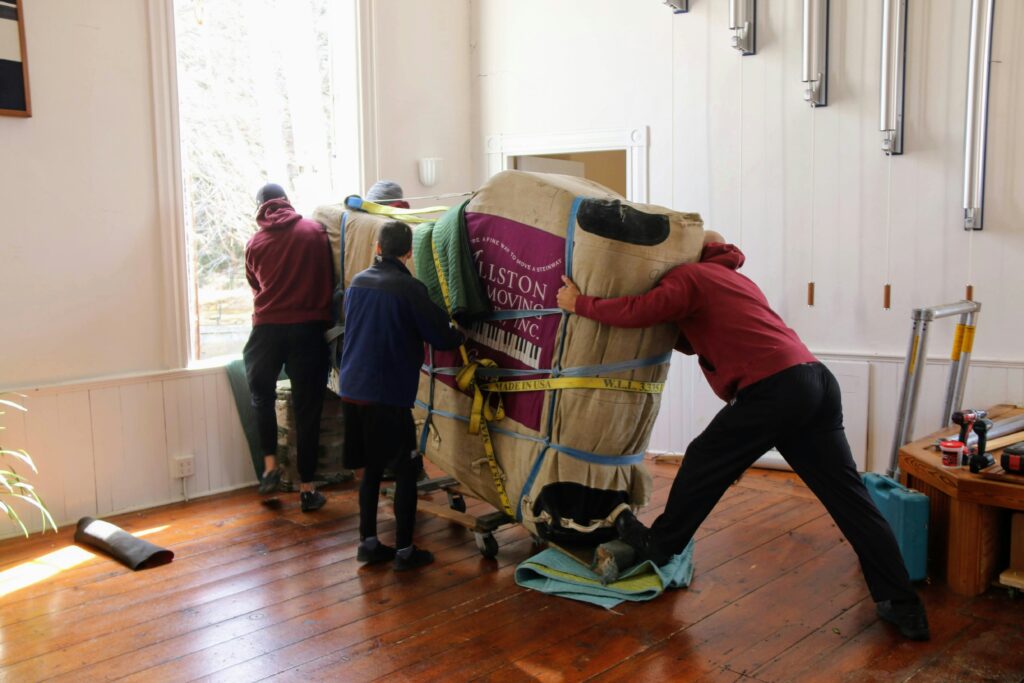
Asheville Homes Create Challenges That Piano Movers Know How to Handle
Not every move happens in an open, modern home with wide hallways and easy access. In Asheville, many properties have features that make piano moving much harder than people expect. Mountain neighborhoods can include steep grades and limited parking. Historic homes may have narrow doorways, original hardwood floors, and sharp turns between rooms. Downtown buildings may involve stairs, elevators, and shared access points that need careful coordination.
Professional piano movers prepare for these conditions before moving day begins. They do not show up and improvise. They look at the path in and out of the home, assess the piano’s size and weight, and create a plan that reduces risk at each step.
The table in the source draft highlights several local hazards, including narrow streets, steep hills, uneven terrain, older homes, and the sensitive mechanics of the instrument, all paired with professional solutions like route planning, protective coverings, ramps, careful disassembly, and climate-conscious transport.
| Local Challenge | What Can Go Wrong | How Professionals Help |
| Steep driveways and hills | Loss of control during loading or unloading | Controlled lifting plans, secure equipment, coordinated handling |
| Narrow halls and staircases | Scraped walls, damaged trim, dropped corners | Measured route planning and careful positioning |
| Older flooring and thresholds | Scratches, dents, cracked edges | Floor protection, padded barriers, sliders, and ramps |
| Tight apartment access | Awkward turns and poor balance points | Team coordination and step-by-step maneuvering |
| Sensitive piano mechanics | Internal damage and tuning issues | Stable transport, proper wrapping, and secure loading |
A professional piano mover brings local knowledge and a method that matches the space. That saves time and effort, but just as important, it reduces avoidable damage and confusion.
Proper Lifting Protects People, Property, and the Piano
One of the biggest reasons piano moving requires professionals is proper lifting. A piano is not only heavy. Its weight is uneven, and that makes it dangerous to lift without training. Uprights, baby grands, and grand pianos all carry their weight differently. One wrong move can result in injury, cracked legs, damaged pedals, or a major drop that harms both the instrument and your property.
Professional movers are trained to handle that weight as a team. They know where to place hands, how to distribute pressure, when to stabilize the body of the piano, and how to move together through tight spaces. Clear communication matters here just as much as strength. Every step has to be deliberate.
That training protects more than the movers. It helps keep the piano safely balanced during turns, ramps, stair navigation, and transitions onto the truck. It also reduces the chance of floors being gouged or walls being hit by a shifting instrument.
This is why asking a few friends to help is rarely worth the risk. Even well-meaning helpers usually do not have the knowledge, grip technique, or coordinated handling needed for a safe transport. A piano may survive an awkward lift once, but internal stress can still shorten its longevity or lead to repair costs later. Choosing professional movers protects your investment before damage has the chance to start.
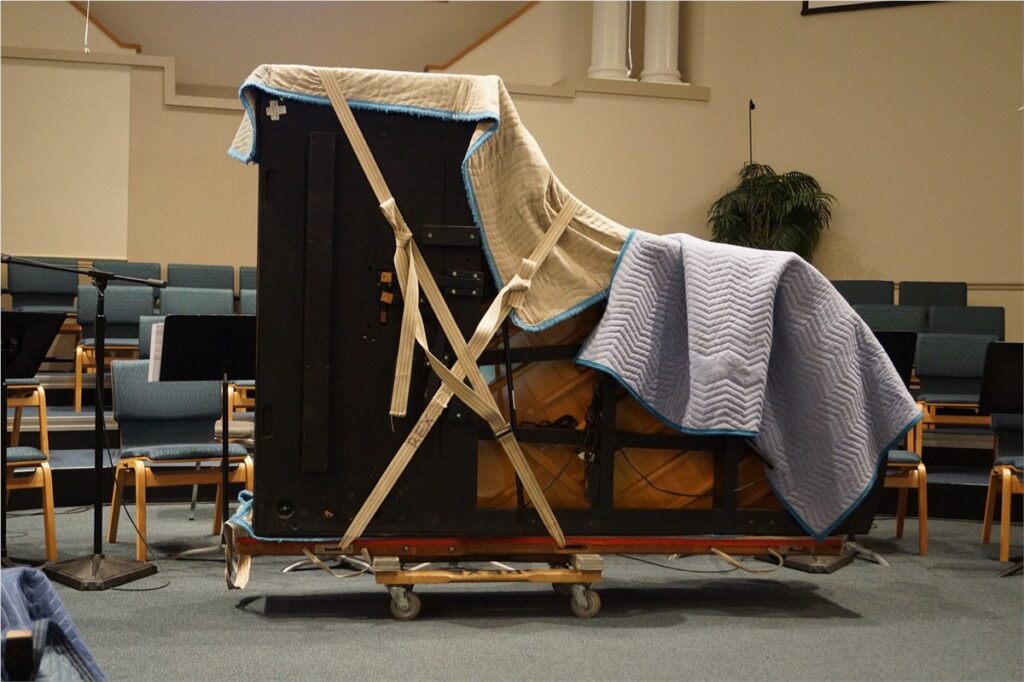
Specialized Equipment Needed for a Secure Move
Piano movers do not rely on the same gear used for standard household furniture. Specialized equipment needed for a piano move is designed around the shape, weight, and fragility of the instrument. That includes piano dollies, reinforced straps, skid boards, protective padding, ramps, floor guards, and secure truck loading systems.
Specialized equipment helps because:
- It supports proper handling without placing unsafe stress on the piano’s frame or legs.
- It reduces vibration and shifting during loading, transport, and unloading.
- It protects floors, doorways, banisters, and walls from contact damage.
- It makes safe transport possible in spaces where standard gear would fail.
- It gives movers better control on uneven outdoor paths, stairs, and thresholds.
They have access to tools most homeowners simply do not keep on hand, and those tools are only useful when paired with their extensive experience. The equipment matters, but the crew’s knowledge of how and when to use it is what makes the move secure.
Professional Piano Movers Protect Your Instrument Inside and Out
A piano can look fine on the outside and still suffer internal problems after a bad move. That is one reason professional piano moving matters so much. The outer finish, legs, lid, pedals, and bench may all need protection, but so do the action, strings, soundboard, and other internal components that affect sound and playability.
Pianos are sensitive to jolts, sudden temperature changes, and improper positioning. If the instrument is tilted too far, bumped repeatedly, or loaded without the right support, it can lead to mechanical issues that are expensive to fix. A valuable instrument deserves a process built around safe transport, not guesswork.
Professional piano movers approach the job with a clear sequence. They inspect the instrument, prepare the path, protect the exterior, secure detachable parts when needed, and load the piano using a method matched to its size and style. A grand piano, for example, may require partial disassembly and careful packing of specific components before relocation. That kind of planning is part of proper handling.
This is also where a specialized moving company adds real value. Asheville Area Movers treats piano relocation as a distinct service, not just another stop on a routine household move. That attention protects your instrument during local moves, long distance service, and even storage transitions when timing between homes does not line up perfectly.
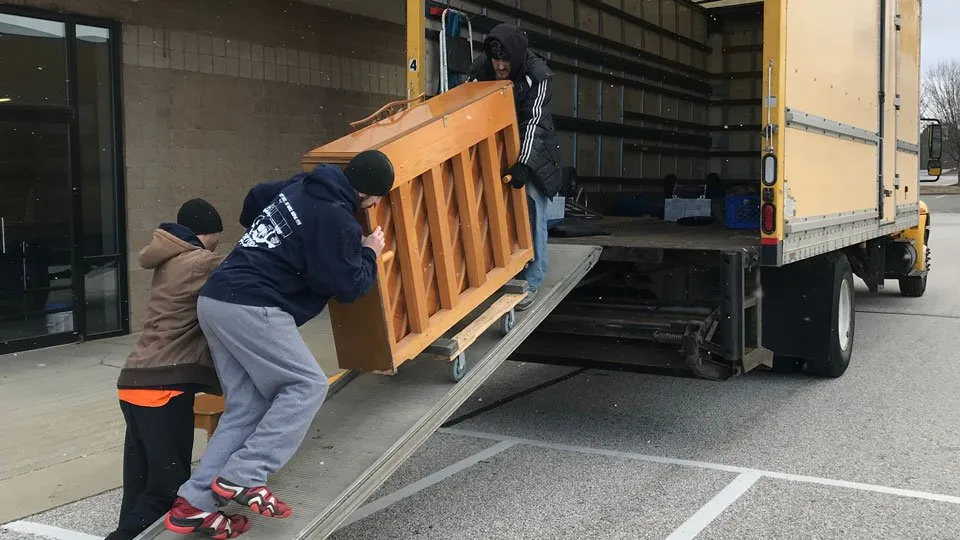
The Right Team Saves Time, Effort, and Stress on Moving Day
Many people first think about piano moving in terms of weight, but the time and effort involved are just as important. Planning the route, gathering the right materials, preparing the home, protecting floors, managing stairs, securing the instrument, and loading it safely all take time. Without a professional team, the process can drag on and become far more stressful than expected.
Working with experienced piano movers simplifies that day. Instead of wondering whether the instrument will fit around a turn or whether the truck setup is secure enough, you have a team that already knows what to do. That preparation keeps the move going. It also helps avoid the delays that come from bad lifting, poor planning, or trying to fix a mistake in real time.
A professional move also means better communication. Before the relocation starts, good movers will explain what the process looks like, what access issues matter, and what to expect from start to finish. That kind of service gives homeowners confidence, especially when the instrument has sentimental meaning or has been in the family for years.
If you are planning a piano move in Asheville, Asheville Area Movers can help you protect both the instrument and the home around it. Our team brings the right equipment, local knowledge, and careful handling needed for a safe, efficient relocation.
What to Know Before You Schedule Your Piano Move
Hiring professionals for piano moving is about protecting what matters. It is the safest way to reduce the risk of injury, avoid damage to your property, and give your piano the careful handling it needs to arrive in good condition. In a city like Asheville, where homes and neighborhoods can make specialty moving more complicated, professional support makes the process much easier to manage.
Before you book, keep these points in mind:
- Ask whether the company has direct experience with piano movers and specialty relocation.
- Share details about stairs, driveways, flooring, and entry points in both locations.
- Mention whether the piano is an upright, baby grand, or grand piano.
- Ask what protective materials and specialized equipment will be used.
- Confirm whether storage or long-distance support is needed as part of the move.
When you are ready to move your piano with less stress and better protection, contact Asheville Area Movers for a quote and a plan tailored to your home, your instrument, and your timeline.